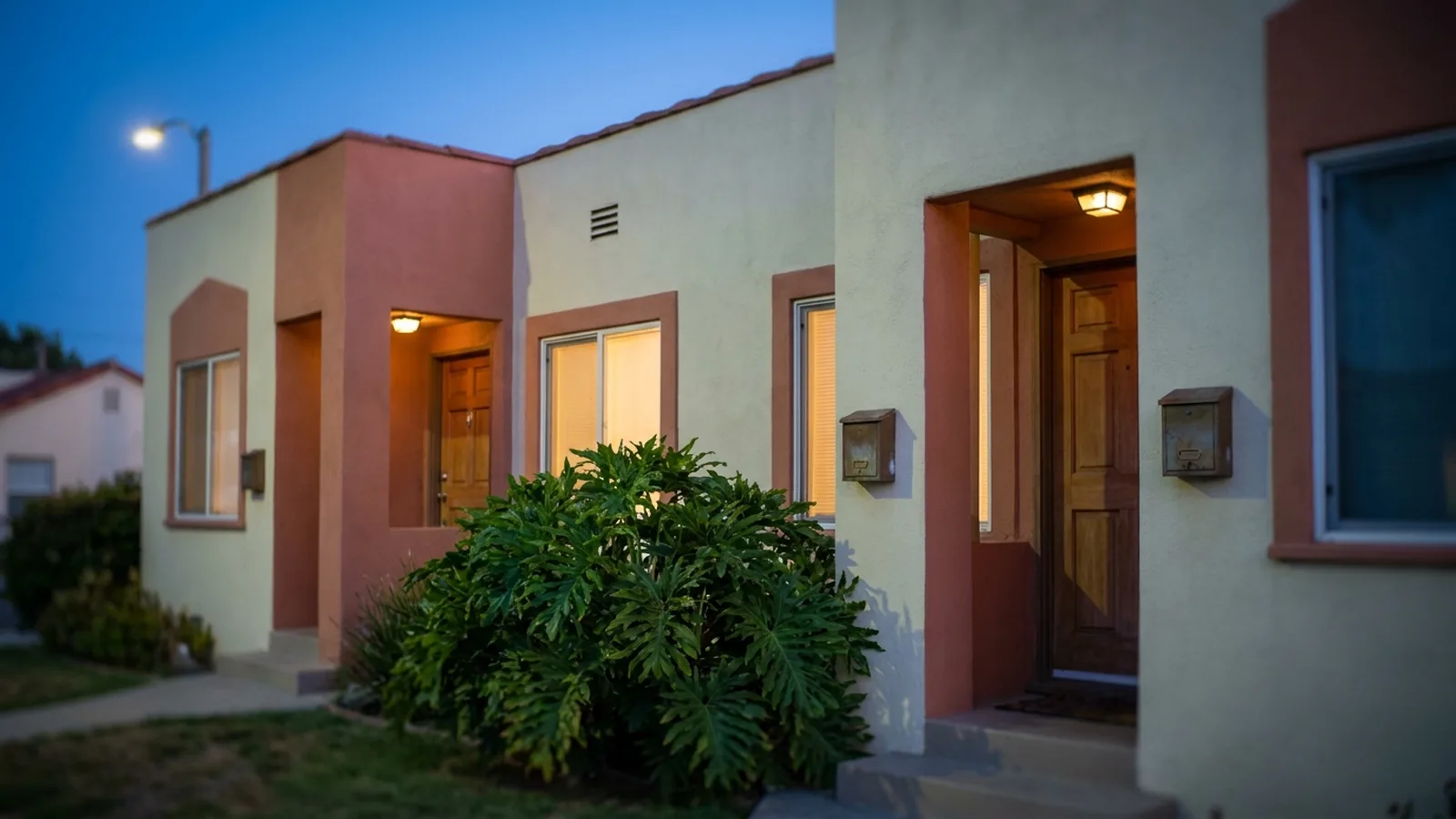
In California you can sell your home almost up to the day of the foreclosure auction, and in most cases selling beats letting the foreclosure finish. A completed foreclosure wrecks your credit and, if you have equity, hands it to the lender's process instead of to you. A sale before the auction lets you pay off the loan, protect your credit, and keep whatever equity is left.
The catch is time. California foreclosures move on a fixed schedule, and your options narrow at each stage. Here's the timeline and what to do at each point.
The California foreclosure timeline
California is mostly a non-judicial foreclosure state, meaning the lender forecloses without going to court using the power-of-sale clause in your deed of trust. The process runs on the statutory schedule in California Civil Code §§2924-2924h:
| Stage | What happens | Timing |
|---|---|---|
| Missed payments | You fall behind; lender sends notices and a §2923.5 contact letter | Day 1+ |
| Notice of Default (NOD) | Officially recorded with the county; the clock starts | After ~120 days late |
| Reinstatement period | You can catch up on past-due amount plus fees | ~90 days after NOD |
| Notice of Trustee's Sale (NOTS) | Auction date set, published weekly for 3 weeks, posted on property | After the 90 days |
| Trustee's sale (auction) | The home is sold to highest bidder or reverts to lender | ~21 days after NOTS |
From the recorded Notice of Default to the auction is 120 days minimum, and in practice it's often 150-200+ days once you account for the §2923.5 pre-NOD contact requirement, postponements, and lender review of loss-mitigation applications. You can sell at any point before the auction actually drops the gavel.
A few California-specific protections shape what your lender can and can't do during this window.
Homeowner Bill of Rights protections
California's Homeowner Bill of Rights (HBOR), at Civil Code §§2923.4-2924.20, gives owner-occupants of 1-4 unit properties real protections:
- Dual-tracking ban (§2923.6). Once you submit a complete loan modification or short sale application, the servicer cannot record a NOD or NOTS, or hold a trustee's sale, while it's pending.
- Single point of contact (§2923.7). One named person who actually knows your file.
- §2923.5 contact requirement. The lender must try to reach you 30 days before recording the NOD.
- Private right of action. If the servicer violates HBOR, you can sue to enjoin the sale.
Used correctly, a HBOR-compliant loss-mitigation application can buy you 30 to 90 days, often the exact window you need to close a sale.
Your options at each stage
Before the NOD. Most room. Sell traditionally with time to spare, or work out a repayment plan, forbearance, or loan modification.
After the NOD, during reinstatement. You can still reinstate by paying past-due amount plus fees and trustee costs ($1,500 to $3,000 in trustee fees on top of arrears). If you can't, this is the window to sell, usually enough time for a fast cash sale, not always enough for a traditional listing that needs 30 to 45 days of marketing plus 30 to 45 days to close.
After the Notice of Trustee's Sale. Auction date is set. A traditional listing rarely closes in time; even financed buyers need 30+ days for underwriting and appraisal. A cash sale closing in 3 to 7 days is often the only path that beats the auction. Lenders will often postpone the sale if you can show them a signed agreement with a credible close date.
With little or no equity. A short sale (lender accepts less than full balance) may be the route. Needs lender approval; package review alone takes 30 to 60 days.
Reinstatement vs. payoff. Different numbers, often confused. Reinstatement brings the loan current and keeps it alive: past-due payments, late fees, trustee fees. You can reinstate up until 5 business days before the sale. Payoff is the full balance to satisfy and release the loan, which is what a sale requires.
Short sale vs. cash sale: how to choose
If you have equity, a cash sale is almost always cleaner. If you're underwater, the choice between a short sale and other options gets more nuanced. Here's how they compare:
| Factor | Cash sale (with equity) | Short sale | Deed in lieu |
|---|---|---|---|
| Lender approval needed | No | Yes | Yes |
| Typical timeline | 7-21 days | 60-120 days | 30-90 days |
| Stops the auction | Yes, immediately | Yes, while pending | Yes, once accepted |
| Credit impact | Like any sale | ~80-150 point drop | ~80-150 point drop |
| Back on the market for a mortgage | Immediately | ~2-4 years (FHA: 3) | ~4 years |
| Money to seller | Yes (your equity) | Sometimes (relocation assistance) | Rarely |
| Risk of deficiency | None | See below | See below |
A deed in lieu of foreclosure is when you voluntarily sign the property over to the lender. Faster than a short sale, but the lender has to agree and often won't if there are junior liens.
Deficiency judgments and California's anti-deficiency rules
California sellers get a meaningful break here. Two statutes matter:
- CCP §580b protects purchase-money loans on owner-occupied 1-4 unit residential property. The original loan to buy your home cannot pursue you for any shortfall.
- CCP §580d protects you after any non-judicial trustee's sale, even on non-purchase-money loans (like a cash-out refi).
The result: most California homeowners going through a standard non-judicial foreclosure on a primary residence walk away without personal liability for the shortfall. Exceptions: junior liens (like a HELOC that wasn't purchase money) wiped out at the senior's trustee sale can still come after you on the note, and short sales without a written deficiency waiver can leave you exposed. Always get the waiver in writing.
Tax consequences
Selling, or losing, a home with debt has tax implications:
- Normal sale at or above loan balance: standard capital gains. The §121 primary-residence exclusion ($250K single / $500K married) usually covers any gain.
- Short sale, foreclosure, or deed in lieu with forgiven debt: cancelled debt is reported on IRS Form 1099-C as ordinary "cancellation of debt" (COD) income.
- The Mortgage Forgiveness Debt Relief Act (MFDRA) excludes up to $750K ($375K MFS) of forgiven qualified principal residence indebtedness. The IRC §108 insolvency exclusion may also apply if your liabilities exceeded your assets just before cancellation.
We cover the broader picture in tax consequences of selling a house in California. For closing math on a normal sale, see closing costs in California 2026 and realtor fees in California explained.
Credit score impact
There's a meaningful gap between selling and letting it foreclose:
- Foreclosure: stays on your credit report for 7 years; FICO drop of 100-160 points is typical. Fannie Mae waiting period for a new conventional mortgage: 7 years (3 with extenuating circumstances).
- Short sale / deed in lieu: also reports for 7 years, but typically codes as "settled for less than full balance." FICO drop of 80-150 points, but Fannie Mae allows a new conventional mortgage in 4 years (2 with extenuating circumstances); FHA allows 3.
- Normal sale before foreclosure: no negative event from the sale itself. Late payments still show, but the catastrophic "FC" code never lands.
If buying again in the near term matters, that gap alone is often the deciding factor.
How a cash sale stops the clock
When the auction is weeks away, a financed buyer can't move fast enough. We buy Bay Area homes for cash and can close in 3 to 7 days, which is what makes it possible to beat a foreclosure date:
- Offer within 24 hours; escrow opens immediately.
- No loan approval or appraisal. Compare timelines in how long does it take to close on a house in California.
- We coordinate the payoff with your lender and request postponement of the sale when needed.
- As-is. No repairs, no cleanout, no showings.
- No commission; we're the buyer, not an agent.
- We buy through liens. Tax liens, HOA, judgments: escrow pays them from proceeds. See can you sell a house with a lien in California.
Related situations we handle: back taxes or tax liens and avoiding foreclosure in the Bay Area.
What happens to remaining liens
At a normal sale, escrow pulls a title report, identifies every recorded lien, and pays them off in priority order from the proceeds so title issues clean to the buyer. If proceeds don't cover everything, junior lienholders sometimes accept a short payoff to release. At a trustee's sale, junior liens get wiped from title, but the personal obligations on those notes can survive.
What to do right now
- Open every letter from your lender. Find out what stage you're in and whether an auction date is set. The NOD and NOTS are also recorded at your county recorder.
- Call your lender about options. Ask for your single point of contact under HBOR. Reinstatement, forbearance, or a modification may buy time.
- Get a cash offer. Even if you pursue another path, knowing what you can sell for fast tells you whether you can pay off the loan and keep your equity.
- Talk to a HUD-approved housing counselor. Free, and they know the playbook.
Frequently asked questions
Can I really sell my house the day before the trustee's sale?
In practice, yes. California law lets you sell up to the moment of the auction, and lenders will often postpone a sale by 7 to 30 days if you show them a signed purchase agreement with a credible close date. The challenge is operational; you need a buyer who can fund without financing contingencies and an escrow team that can close in days. A cash buyer is usually the only realistic path this late.
Will my lender accept less than what I owe?
Sometimes, through a short sale. The lender reviews a hardship package and approves if the net is roughly equal to or better than a foreclosure auction. Get the deficiency waiver in writing.
Does selling before foreclosure hurt my credit?
The sale itself doesn't. Missed mortgage payments already hit your credit, but completing the sale prevents the "foreclosure" notation, which is the single most damaging mortgage event. You'll qualify for a new mortgage years earlier than if you let it foreclose.
What if I have a second mortgage or HELOC?
Both have to be paid off (or settled) for clean title. In a cash sale with equity, escrow pays both at closing. In a short sale, both lenders must approve; the junior often holds out for $3K-$10K to release.
Will I owe taxes on forgiven debt in a short sale?
Possibly. Cancelled debt is generally taxable on a 1099-C, but the Mortgage Forgiveness Debt Relief Act, the insolvency exclusion, and primary-residence rules often eliminate or reduce the bill. Run the numbers with a CPA before signing.
Can the lender come after me for the shortfall after foreclosure?
Usually not on a purchase-money loan on your primary residence; CCP §580b and §580d protect most California homeowners. Exceptions: wiped-out junior liens (especially non-purchase HELOCs) and the rare judicial foreclosure.
How fast can you actually close?
If title is clean and you respond quickly, 7 days from accepted offer is realistic. With a lien or HOA payoff to coordinate, 10-14 days is more typical. When an auction is scheduled, we work backwards from it.
Talk to us before time runs out
If an auction date is on the calendar, the worst thing you can do is wait and hope. Get the numbers in front of you. We'll give you an honest cash offer within 24 hours, walk through your payoff, and tell you straight whether selling to us, listing traditionally, or pursuing a short sale or modification is the better move. If something else is better for you, we'll say so.
Start at get your offer, or call or text 415-800-1415. Time is the one thing you can't get back in a foreclosure.
About Roe
Roe is part of the Maple Home Buyers team. Roe leads the Maple Home Buyers team in the Bay Area. Family-owned, BBB accredited, 2,000+ homes purchased since 2009.
Learn more about our team →Thinking about selling? Get a free, no-obligation offer.
A real local person picks up. No high-pressure pitch, no credit check, no obligation.